
Mei-Shun learned how to dance “Echigo-Shihi” a few years ago. As a beginner, she did not understand well the way to write scores. That is why the score is tough to decode – mirror-like sketches sometimes appear. 80% is clear now, leaving sarashi part untouched.
Japanese dance
2013 Performance
StandardMei-Shun posted a short column on her last performance “Shima-no-Senzai (=Senzai, the priestess)” to the public relation brochure of Tsuchiura City. It follows partly below.
… “Shima-no-Senzai” features a woman who originated the geisha girl: she is said to be the first one who served dance entertainment to a party site. In the first half of this performance, you put on a long-hem kimono with a sash bound in maiko (=younger geisha) style. Chou-Ken, a light kimono coat is added on the kimono. Plus the ponytail wig with flower-shape accessories, a golden cap and a sword hung around the waist, it weighs approximately five kilograms …
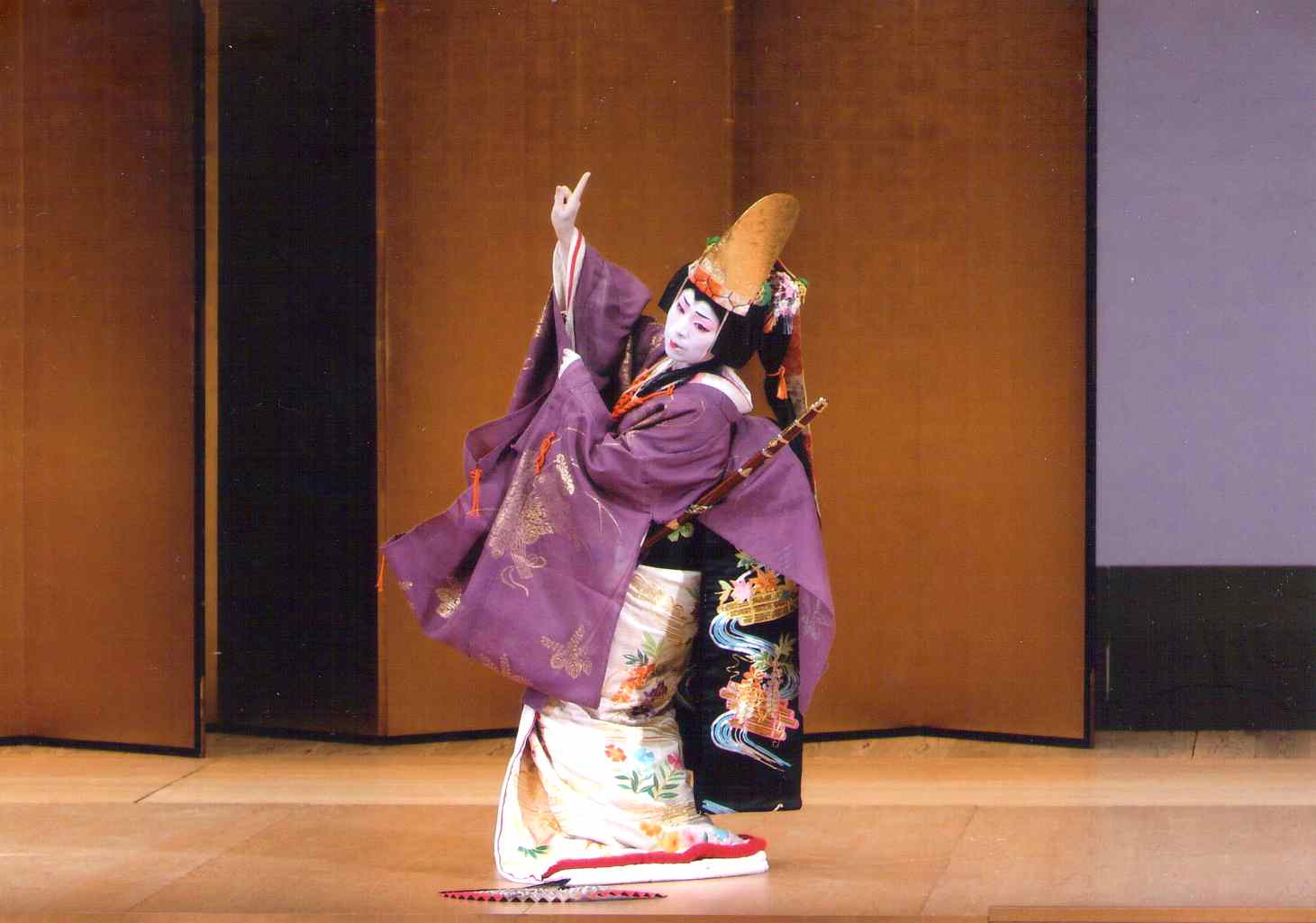
That means a stage performance is the best exercise for a dancer.
Summer Lesson
StandardMaster Mei-Shu gave Mei-Shun a lesson. Quick steps of manly dance are so hard today, since it is torrid after the typhoon. It seems nice for diet.
A Hard Task
StandardIt is no easy to write a dancing score. Normally, masters sit down face-to-face with their students. Many of them keep sitting, move their upper bodies only, like in the mirror. In this case, when you sketch your master, his/her right hand will be your left one, left hand right. Or you have to make the score upside-down, when you try to sketch yourself.
Score Writing
StandardJapanese dance has scores, as music does. Musical score for music, dancing score for dance? … A Master’s thesis published from Kanazawa College of Art mentions this word, so it seems correct.
Today’s Lesson
StandardMaster Mei-Shu gave Mei-Shun a lesson. “Echigo-Shishi” is a bit different from normal manly dance: it is for kid performers. Gorgeous performance full of scenes to watch including sarashi (=a long strip of cotton cloth) swinging, yet at the same time, it is no easy for grown-up dancers to do with lightness of steps.
Any Disease?
StandardMaster Mei-Shu, stayed for a while in Hokkaido, has come home. She lost 8 kilograms in a year – it looks nothing but unusual. Shall I bring you to the hospital? No, it is never allowed for just one of her students to force anything. Just feeling worried is so hard. It looks like telling Mei-Shun that she is powerless.
The Second Half of 2014
StandardThe latter half of this year started. Mei-Shun would be on stage on November 3rd, the National Holiday. Only 4 months left! Feeling nervous with this idea, she stayed up till late last night.
Performer from Echigo
Standard“Echigo-Shishi (Performer from Echigo)” is performed to naga-uta. There are many kind of samisen (=three-stringed Japanese banjo) music including kiyomoto, yamato-gaku, shinnai etc. for Japanese dance. What is the difference between them? Samisen music can be divided into two categories; story-telling katari-mono and sketch-like utai-mono. The former have gidayu, tokiwazu, kiyomoto and shinnai while the latter naga-uta, yamato-gaku. The neck of samisen becomes thinner from the widest gidayu, middle-width tokiwazu and kiyomoto to naga-uta.
2014 Performance
StandardNamed in 2012, Mei-Shun has been performed on the stage set in Tsuchiura City Hall, Ibaraki since 2013. This year’s program would be “Echigo-Shishi (Performer from Echigo)”.
 meishunkikunoe