
In her hometown Tokushima, Mei-Shu I has founded Kikunoe Ryu. This name took kiku (=chrysanthemum flower) from late Master Kikuzo, while noe (=above) from the heading family O-noes. Mei-Shu I rejected to head Kikunoe; she knew how hard it was to keep a school of Japanese dance. Instead, she assumed the office of the chairwoman of the board of directors.
Interview to Master: 1
StandardKikunoe Ryu has been established by Mei-Shu I in 1992. She belonged to Otowa Ryu in Osaka for a long time. After her Master Kikuzo had passed away, kabuki actor Onoe Baiko VII advised her to become the leader of a new party of Japanese dance.
Japanese Culture@wkday
StandardWe enjoy much kind of “imported” celebrations today; Halloween and Christmas Day seem to join top three of them. On October 1st, all items celebrated the Autumnal Equinox Day are replaced by Halloween ones. Roppongi, Tokyo must have started this illumination from November 1st, representing the same for Christmas.

Tire around Waist
StandardMei-Shun must have gained a weight after the performance. She clearly knows why – by eating too much. Mountains of tasty fruits and refreshments were shared in the waiting room; we brought home rest of them. A big box of her favorite cookies arrived. Oseki-han (=steamed rice with red bean) was waiting for her. Now, ten days have passed. Time to restart controlling herself!

Another Kimono
StandardMaster Mei-Shu gave Mei-Shun a kimono again. The latter feels so happy, yet aren’t you too generous, Master? When asked so, she smiled and said that the one was too long for her. Dark blue, doubled with dark red inside. How cool it is! Thank you very much.
Getting cold, Getting sweet
StandardShin loves to have a morning nap on the sofa. Mikan-chan never comes close to him in summer, while takes opposite actions in winter. Her sweet meows wake Shin up, to open his arms and let the baby girl in. Feeling a bit envy, Mei-Shun prepares breakfast – now, it’s ready. Hi babies, it’s time. Still sleepy? Oh-kay. Here is tickling fingers!
Thanksgiving Coffee
StandardOur party of Japanese dance is called “Ka-Shu no Kai” (after the previous name of Master Mei-Shu), from which two grand daughters of the Master and Mei-Shun performed in 邦楽発表会 this year. Mrs. S, a member of Ka-Shu no Kai, kindly sent us cute bouquets. Full of gratefulness, Mei-Shun picked up her and Master Mei-Shu to a nice café. It is very rare to see us enjoy chatting not in kimono.
Congratulations and Thanks
StandardThanks to all of you, Mei-Shun has reached 100th post. She therefore made a petite decision to join the rental service. See you next week in a new address.
What a miracle
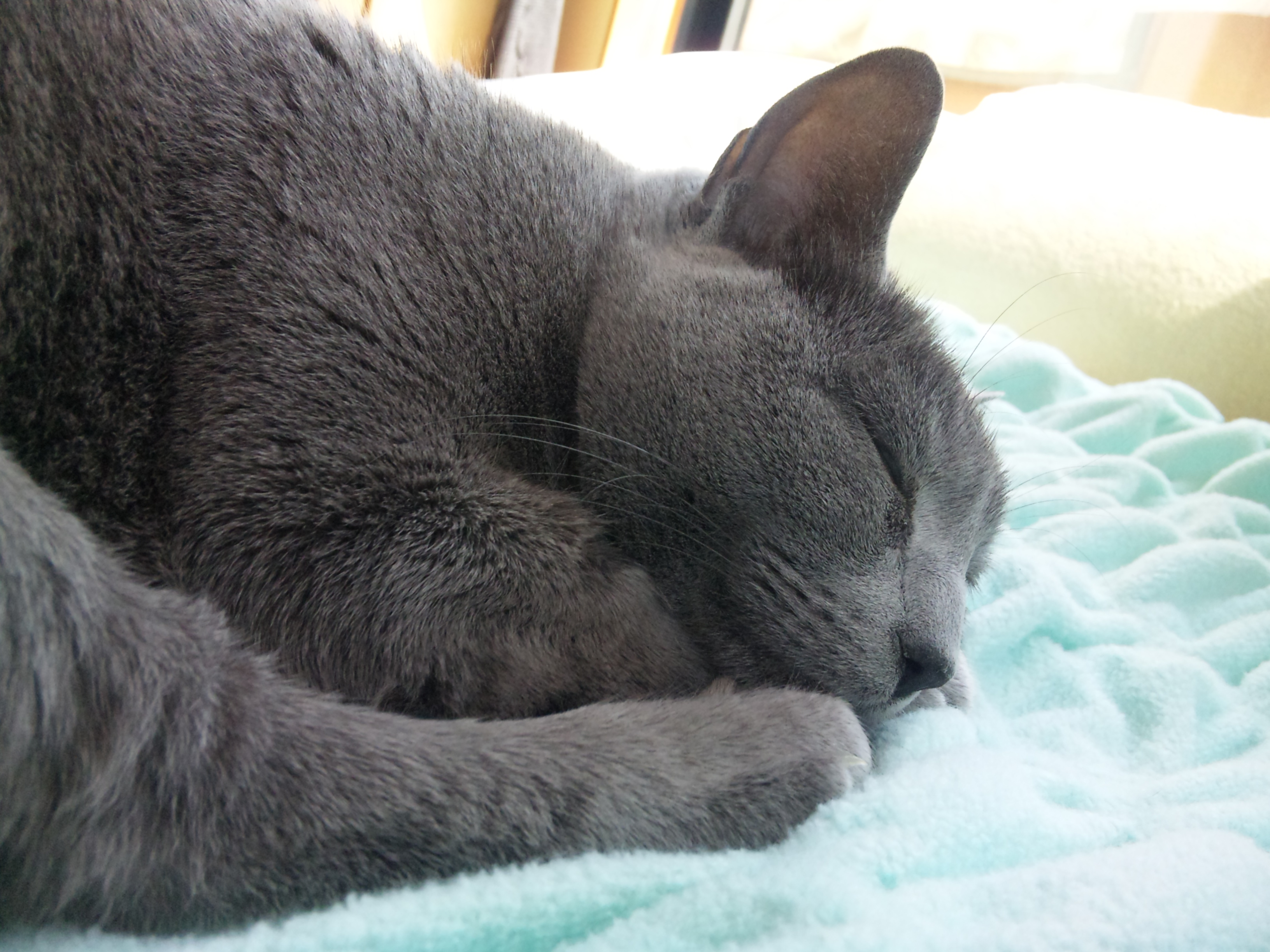
StandardTora-chan’s first collar has been found out: it was hung on a hedge of nearby factory. When Mei-Shun passed by, the name tug made of a rhinestone glittered in the morning light, as if it had called her. Somebody kind enough pick it up? Wow, thanks a lot.
Strolling
StandardMei-Shun (and Shin on weekends) started walking toward the nearest shrine. Daily exercise including dance practice is indispensable for her healthy life. It is a nice day, while a dragonfly escorted her through a narrow path between rice paddies. We are satisfied to have such a beautiful environment conserved well.
 meishunkikunoe