
Today’s lesson was given at night. Mei-Shun has to be careful not to make Master Mei-Shu feel too tired. She often complains about her physical burden to go to Tokushima once a month. Since Master Mei-Shu is our chairwoman of the board of directors while the best dancer, it is her duty to instruct our directors.
travel
The Long and Straight Road
StandardDuring every new-year vacation, Mei-Shun bring her mother-in-law to a Yasaka Shrine in Tsuchiura, the headquarters of which is in Kyoto, closely related to Gi-On Festival. Since Tsuchiura branch is not registered in the navigation system of her car, Mei-Shun has to rely on mom’s memory. Well. She wishes it were good enough …
Mother of Art
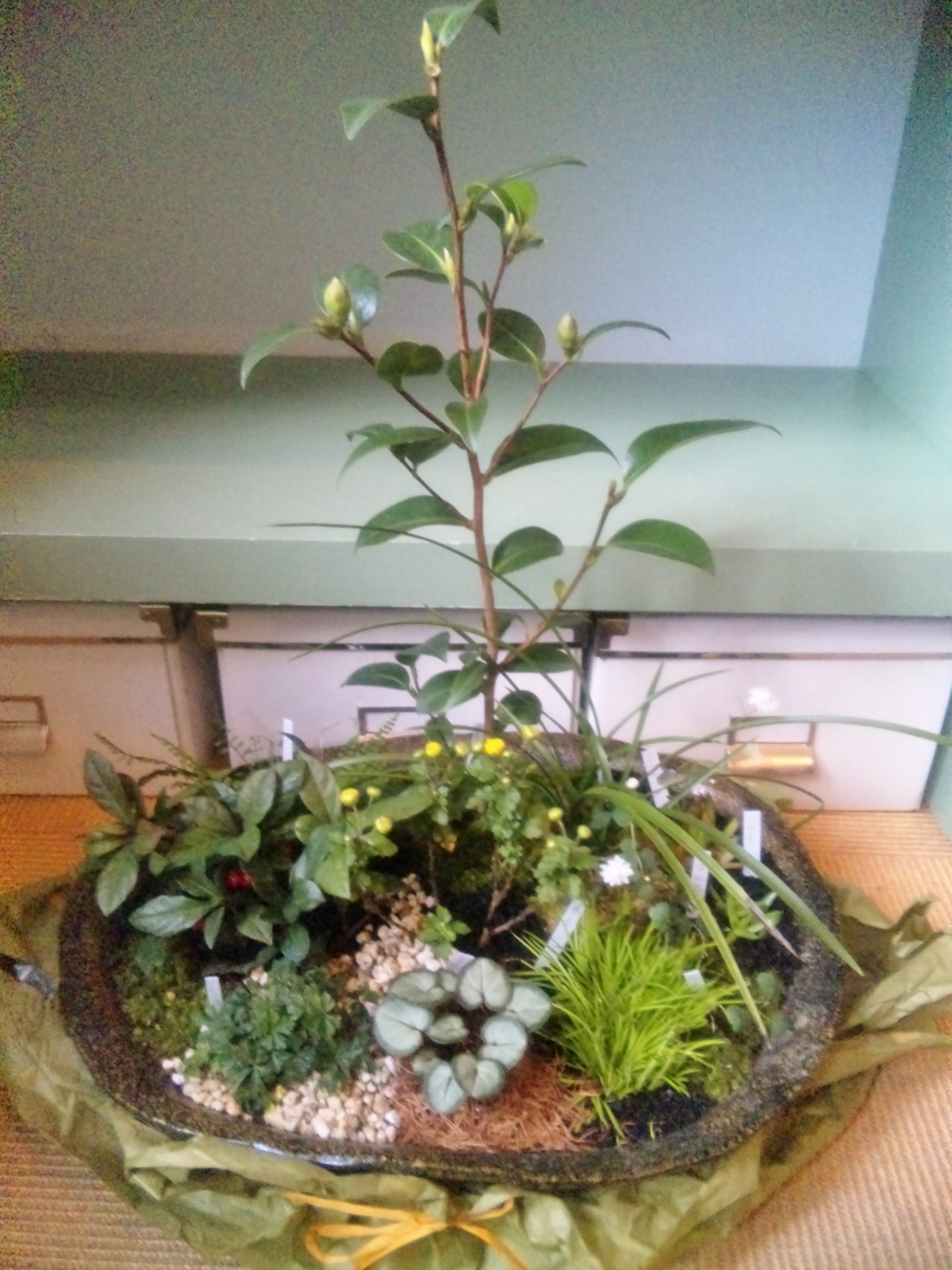
StandardExcellent. Just excellent. Mei-Shun and Shin met Kaori-san, an illustrator Ms. KOGASHIWA, Kaori in Kyoto. Gallery “Merry-go-round” accommodates a bookstore and an exhibition space where you can see her fantastic works by December 3. And this chic flower as well, presented by her mother.

Japanese Culture@wkend
StandardNabe-mono, a Japanese cuisine quite similar to stew, is much preferred from late autumn to early spring. We serve ourselves boiled vegetables, meat and fish from a wide-open pot set on a cooking burner in the center of a table.
Botan Nabe by Hata-Kaku, Kyoto must be one of the best experience. Wild boar meat is served like a peony flower, simmered in white miso soup.

To Our Convenience
StandardMei-Shun drove on the highway toward Ibaraki Airport to pick up Shin. We found it the most convenient for trip to Kansai area, either for business or pleasure – no traffic jam, taking just an hour, wide and free parking space. Thanks, Mr. Governor.
Invitation to Kyoto!
StandardMs. KOGASHIWA, Kaori gave Mei-Shun an invitation to her first exhibition held in Kyoto, titled “Ohanashi-no-Ki-no-Shita-de” (=Under Tree of Stories) from Nov. 22 to Dec. 3. She has been good at drawing since her high-school days, currently works as an illustrator. Congratulations, Kaori-san.

Japanese Culture@wkend
StandardTsuchiura Fireworks Competition is held on the first Saturday of October. Yesterday was clear with a bit of clouds, nice weather for the 83th event. “Competition” means that craftsmen of all over Japan bring their best works toward Tsuchiura, aiming to win the best prize of the year. 2014 theme seems a color combination — an amazing technique which gives three colors at once in different directions. One mammoth ball of fire looked like a colorful balloon!
Egret-like Castle
StandardMei-Shun visited Himeji Castle this weekend. After repair, some people ironically call it “shiro-sugi-jo” instead of “shira-sagi-jo” (=white castle looks like a beautiful egret), meaning too white one. They might prefer the clear contrast between black roof and white wall of normal Japanese castles.
Shikoku Tour
StandardWe visited Shikoku from 19th to 21st: stayed at Dogo Onsen hot spring in Matsuyama City on 19, while at Katsurahama beach in Kochi City on 20. Please click respective sightseeing links below for details.
Dogo Onsen:
http://www.dogo.or.jp/pc/top_eng.htm
Kochi City including Katsurahama beach:

