Our baby avocado is very flexible. In sunny morning, he tries to face to the east. As the sun comes up toward the south, he turns to the right. Mei-Shun changes place of their pot, expecting his straight growth.

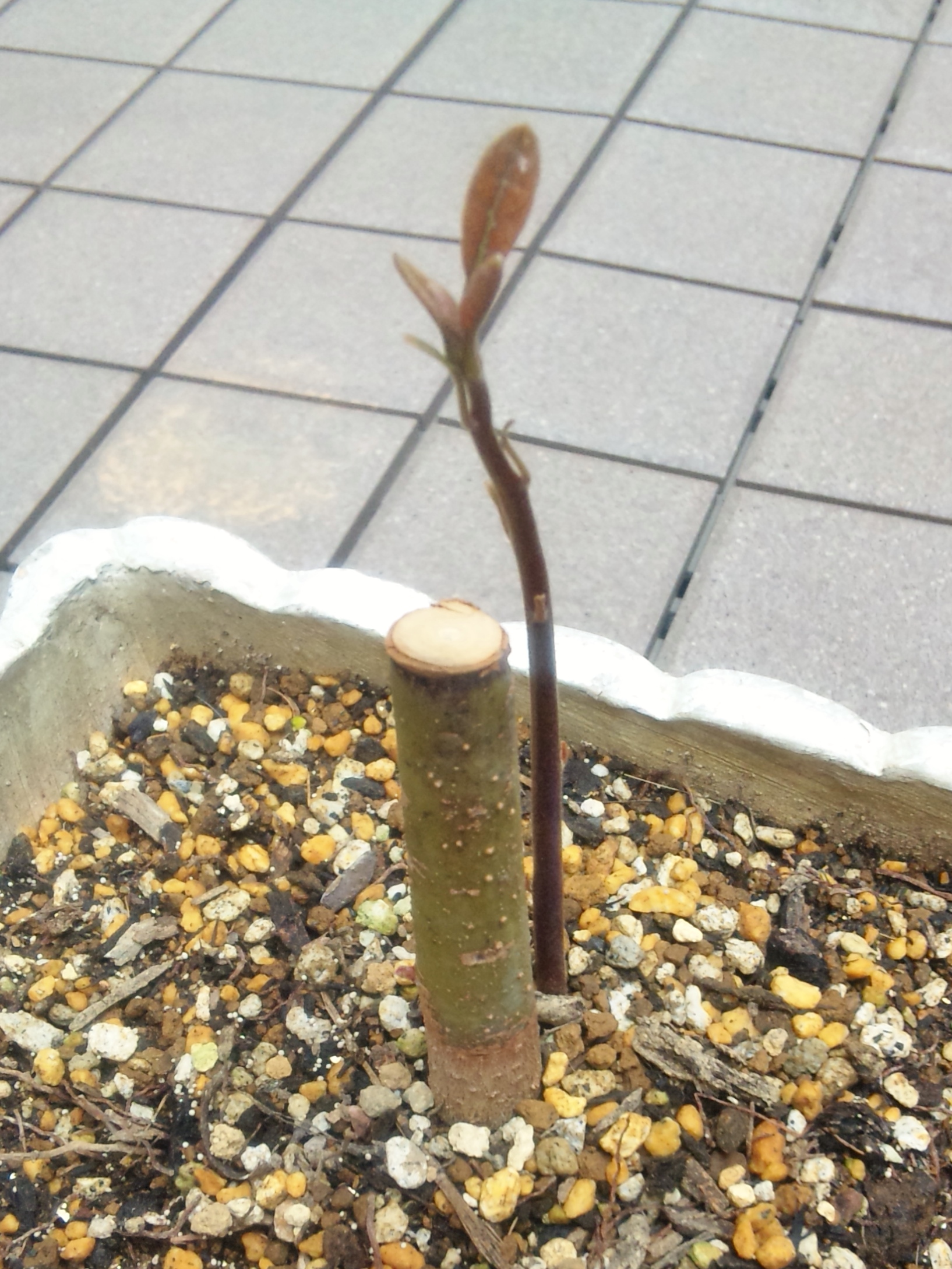

Our baby avocado is very flexible. In sunny morning, he tries to face to the east. As the sun comes up toward the south, he turns to the right. Mei-Shun changes place of their pot, expecting his straight growth.
Mei-Shun feels a slight pain these days in her scar resulting from the operation. She did not know why, just thought that she might have made too much exercise, until Shin pointed out the reason: a low atmospheric pressure. Ah, they say it often caused pain for samurais wounded by swords in ancient times.
She looks the princess of this pond kingdom, with red and gold dot on her white dress. Her carp friends serve as food seekers who invite her for lunch; they are so quick to float toward the surface when human beings come nearby. And the princess elegantly appears.

… is actually a chocolate day for Japanese people. Mei-Shun has prepared boxes of chocolates for her lover, family members, close friends, colleagues, etc. When she stayed in UK, couples exchanged funny cards with each other on February 14th, looked very interesting. Which custom would you prefer?

Master Mei-Shu gave another idea for Mei-Shun’s 2015 performance – “Suisen-Tanzen“, an image of a flamboyant guy strolling through the downtown at night in the Edo period. Master might think of a kind of resemblance between “Shima-no-Senzai“, 2013 performance by Mei-Shun, and “Shiokumi“.
Mei-Shun read that dried mushrooms taste good. Stored for longer, they make nice combination with miso soup, nabe, flavoured rice, etc. It is fine today, sunny enough in our living room. Would you like music too, Mesdemoiselles?

Ms. KOGASHIWA, Kaori gave Mei-Shun an invitation to her first exhibition held in Kyoto, titled “Ohanashi-no-Ki-no-Shita-de” (=Under Tree of Stories) from Nov. 22 to Dec. 3. She has been good at drawing since her high-school days, currently works as an illustrator. Congratulations, Kaori-san.

A total lunar eclipse could be seen tonight. It begins around 18:00, the time when Mei-Shun start her lesson at the community center. No delay or such a rare natural phenomenon would slip out of the arms.
Do you know the word kawatare? It can be written like 彼は誰, meaning the time dark enough to wonder who is there in older Japanese. It first included both sunrise and sunset, yet soon the latter has been replaced with tasogare or 誰そ彼. Thanks a lot, kotobank.

