Such beautiful green peas! Mei-Shun boiled them in sincere accordance with grower’s instruction. He told us to keep the peas in hot water until it gets colder. So, they have no wrinkle on the face. Let’s enjoy their baby-skin texture and sweetness.


Such beautiful green peas! Mei-Shun boiled them in sincere accordance with grower’s instruction. He told us to keep the peas in hot water until it gets colder. So, they have no wrinkle on the face. Let’s enjoy their baby-skin texture and sweetness.
Mei-Shun loves 和菓子=wagashi, Japanese sweets. Anko (sweetened bean paste) is harmonious not only with green tea but also with sugar-free tea and coffee. You can enjoy local excellence of taste at home these days, thanks to frozen ones available on delivery services.

Shin has brought home a wild vine when he had a business trip to Nagano. The fresh fruit tastes nice, yet a bit too sour. Mei-Shun therefore made it soaked in white rum. We tried this beautiful violet color at the end of 2013 – it gave a fine scent as well. And to date, it has been separated into bottled liquid and fruit.

Master Mei-Shu gave another idea for Mei-Shun’s 2015 performance – “Suisen-Tanzen“, an image of a flamboyant guy strolling through the downtown at night in the Edo period. Master might think of a kind of resemblance between “Shima-no-Senzai“, 2013 performance by Mei-Shun, and “Shiokumi“.
Mei-Shun’s last piano instructor Ms. S informed that one of her works won a musical prize held in Tokyo last year. Based on “Csikos Post” by Hermann Necke, it sounds lively, showing her passion and techniques poured on the keyboard.

A covering piece of acrylic glass has been set on “Christmas Tree” by Kaori-san, who advised Mei-Shun to use that material for maintenance of colorant quality. It would also work as a locket – whose photo shall be put behind?

One night later, shocked garlic looks all right in a soy-sauce pool. And that strong scent is recovered. Good boys, Shin would be satisfied with you. Osechi, rice cakes and sweets have made us weigh a little (?) more, so see you next week.

As one of entertainments of the new year, we have 百人一首, Poetry by 100 Celebrities. Each poem has 5+7+5+7+7=31 syllables. Players would remember the latter 7+7 part of a poem, look for and take the card on which it is written. A reader would help with the illustrated cards of whole poems. The winner is a player who takes the most number of cards, yet the real joy of this game seems to be in the reading.


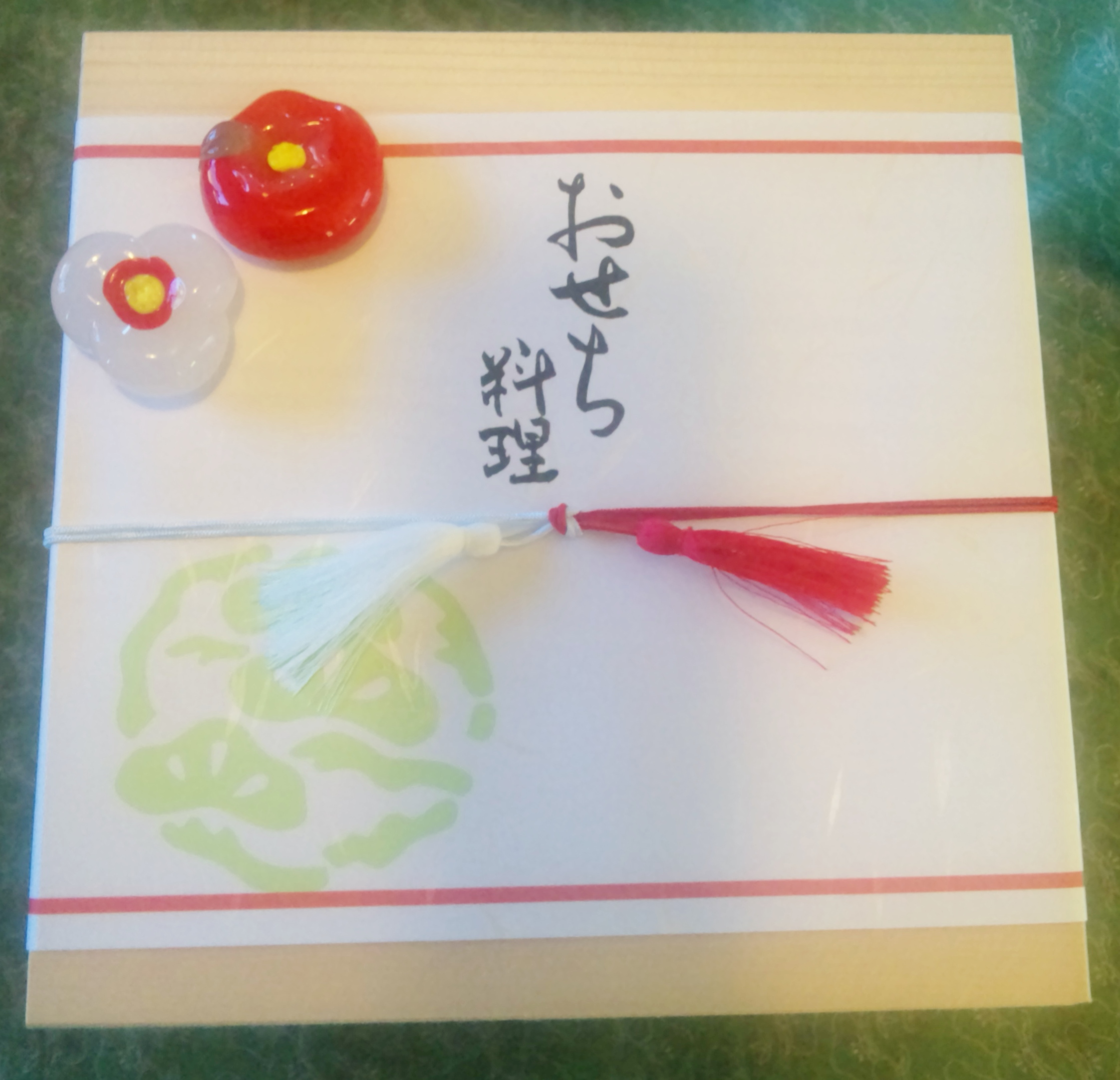
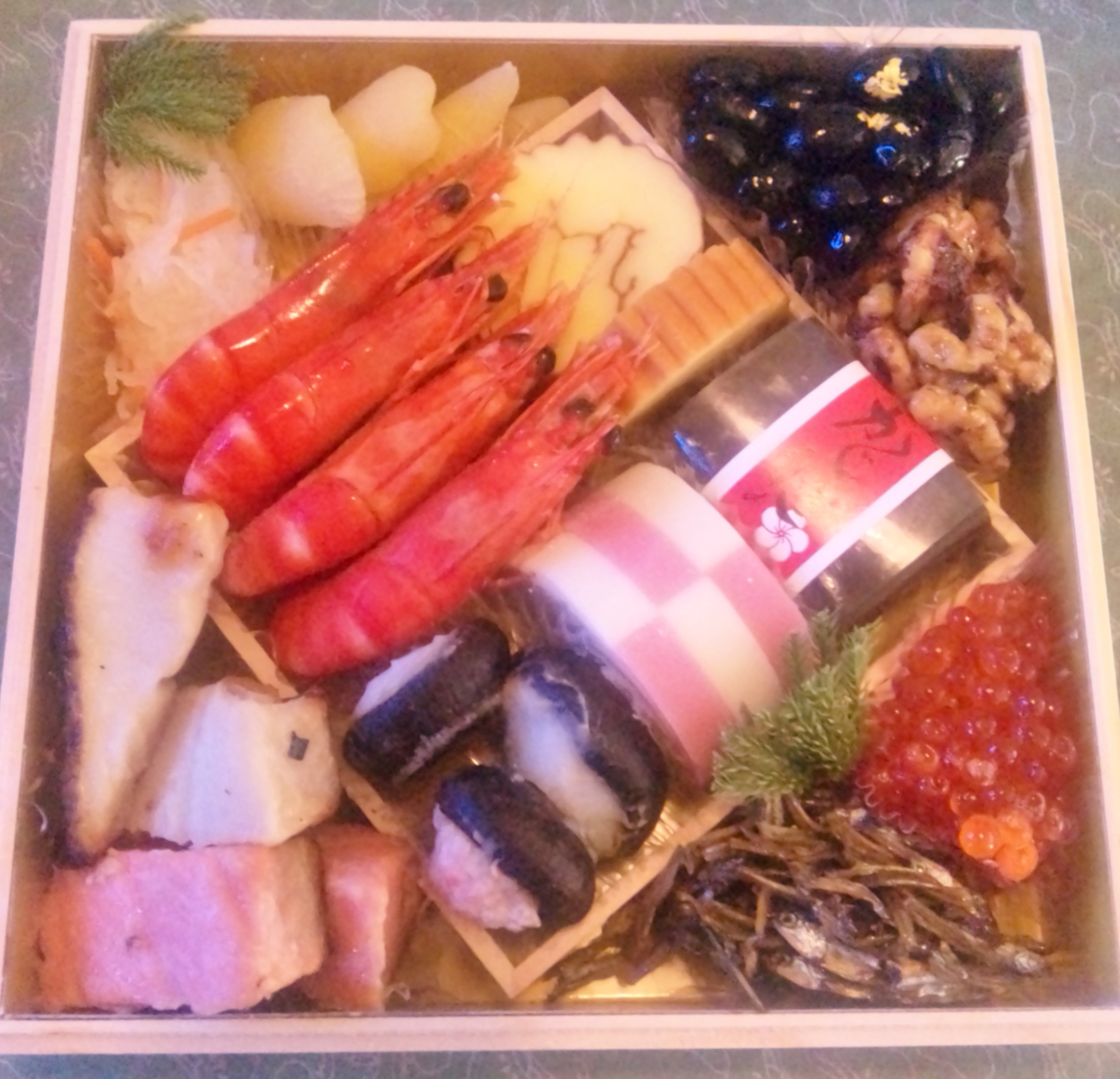
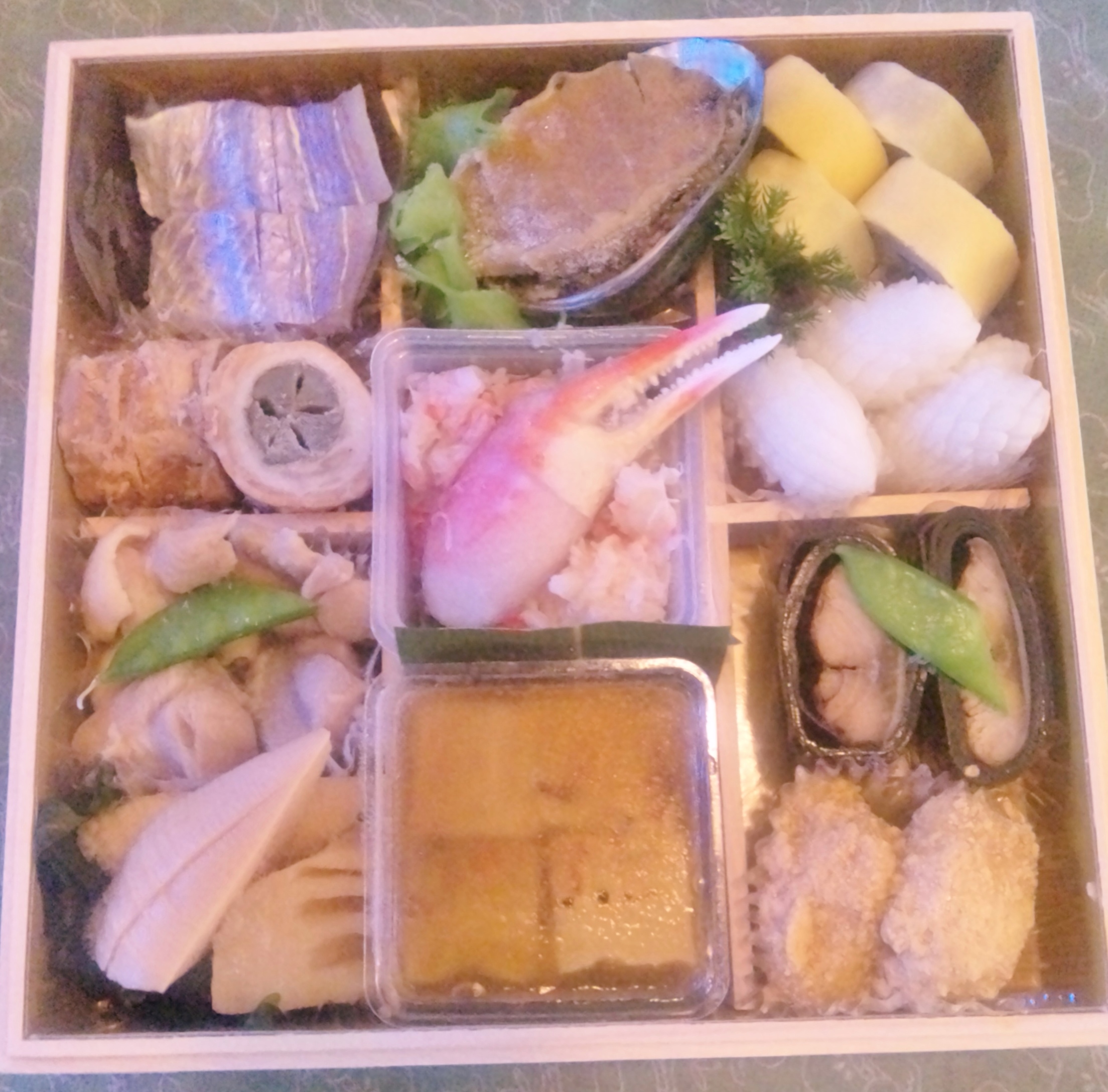
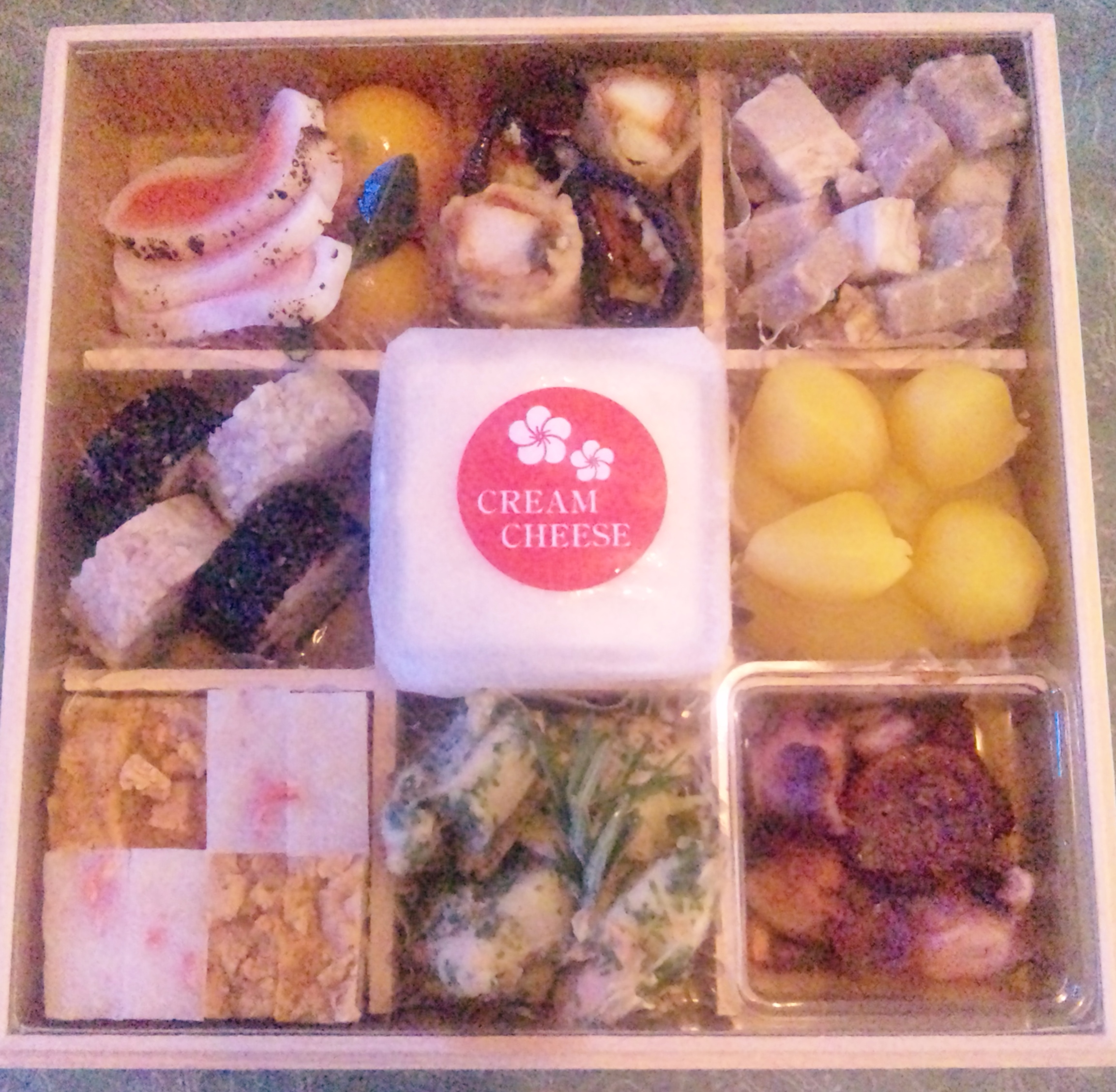
Akemashite Omedeto; A happy new year! As one of representative menus of washoku (=traditional Japanese cuisine), please find osechi below.
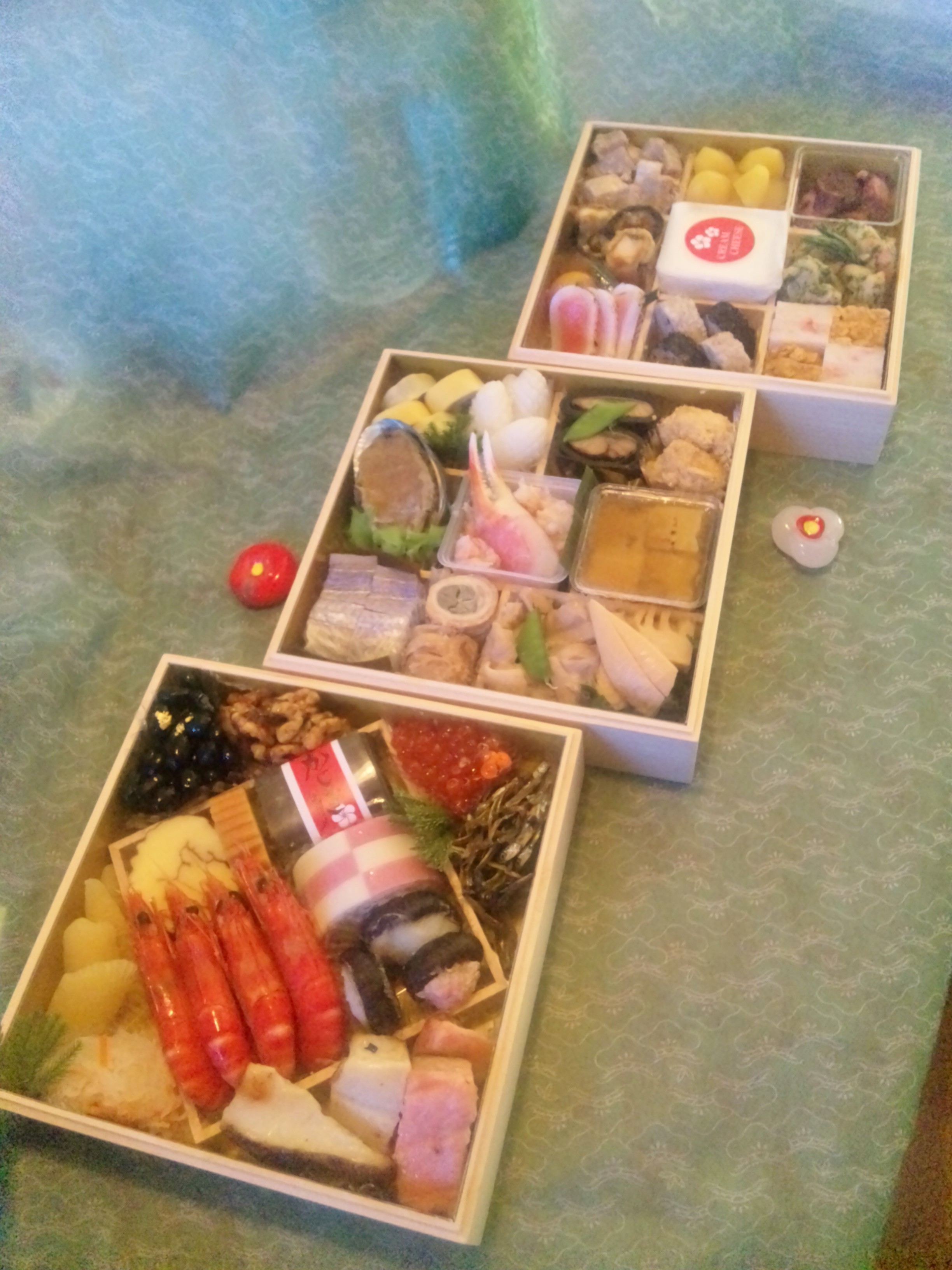
The First Box
The Second
The Third (optional European/American Style foods)
New Year is coming soon. Let’s clean up your room to let your mind feel refreshed. Mei-Shun put her kimonos into winter order; yukatas must take upper position. Hello again, Ms. Biscuit. You would be put on for her first lesson.
 meishunkikunoe